When an incident fires, your team shouldn't spend the first ten minutes figuring out who owns what. Rootly Catalog connects your services, teams, runbooks, and dependencies directly to every incident—so responders arrive with even more context.
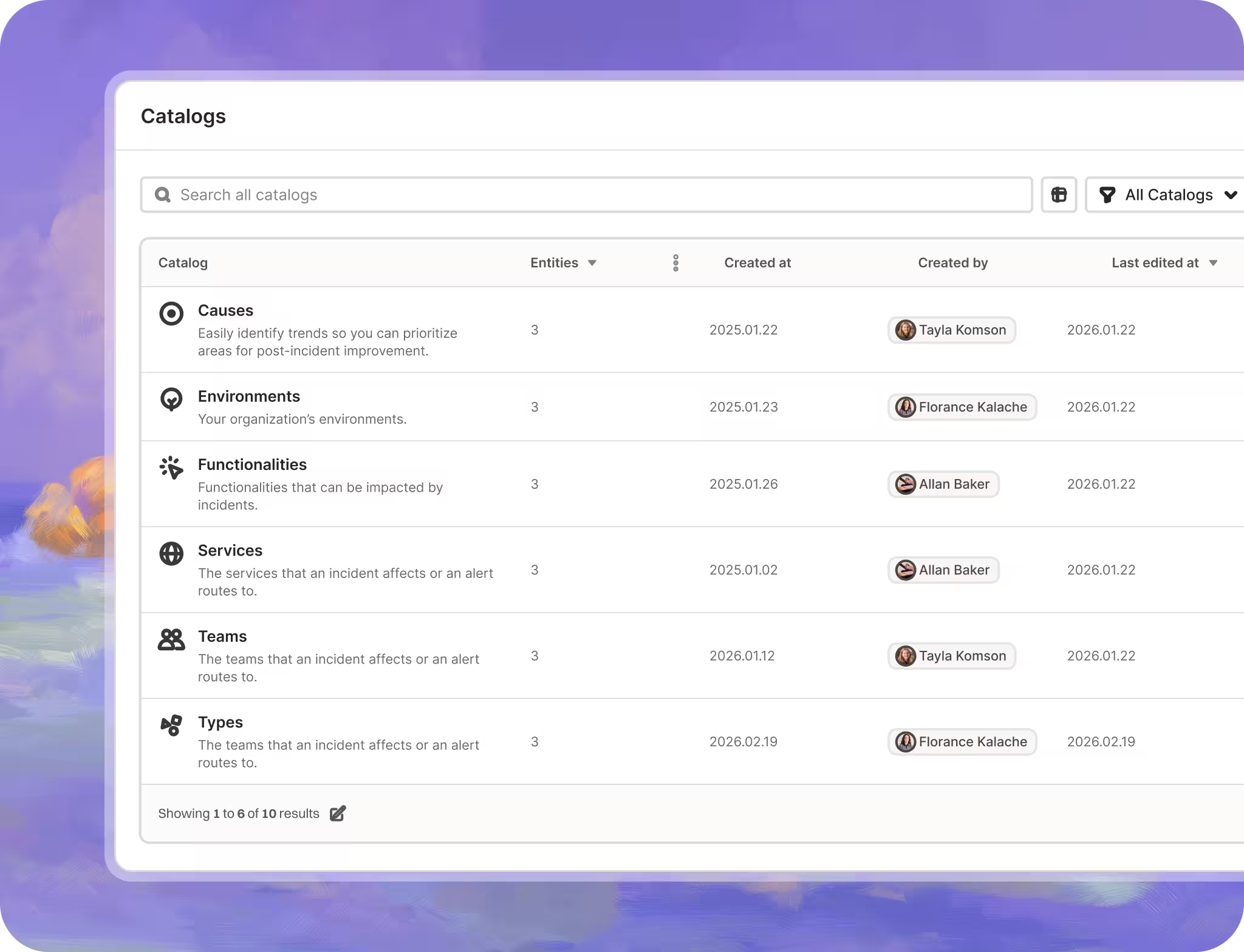

























Sync from Cortex or other catalogs and Rootly does the rest. No existing Catalog? Rootly helps build one from your environment in minutes.
The moment your Catalog is set up, it starts powering incident decisions—routing, workflows, investigations, retrospectives—automatically.
Update ownership and metadata through a clean UI or via API—versioned, reviewed, and consistent with how your team ships.


Your org, your way
Model your organization in your own terminology and sync automatically from the tools you already use. No imposed structure. No rebuilding from scratch.
Context before you ask for it
The moment an incident is declared, Rootly automatically pulls ownership, dependencies, runbooks, and more into the incident record. No manual lookup. No tribal knowledge required.
Every workflow
Catalog data drives alert routing, workflow automation, stakeholder notifications, and more across the entire Rootly platform, the moment it's needed.
Rootly AI knows your service dependencies, recent changes, and ownership history from the automated, catalog-driven service directory, internal incident data, and third-party connections, before it starts investigating, so root cause comes even faster.

Already running Cortex, Backstage? Rootly connects directly to your existing source of truth—no rebuilding, no duplicate maintenance, no starting from scratch.
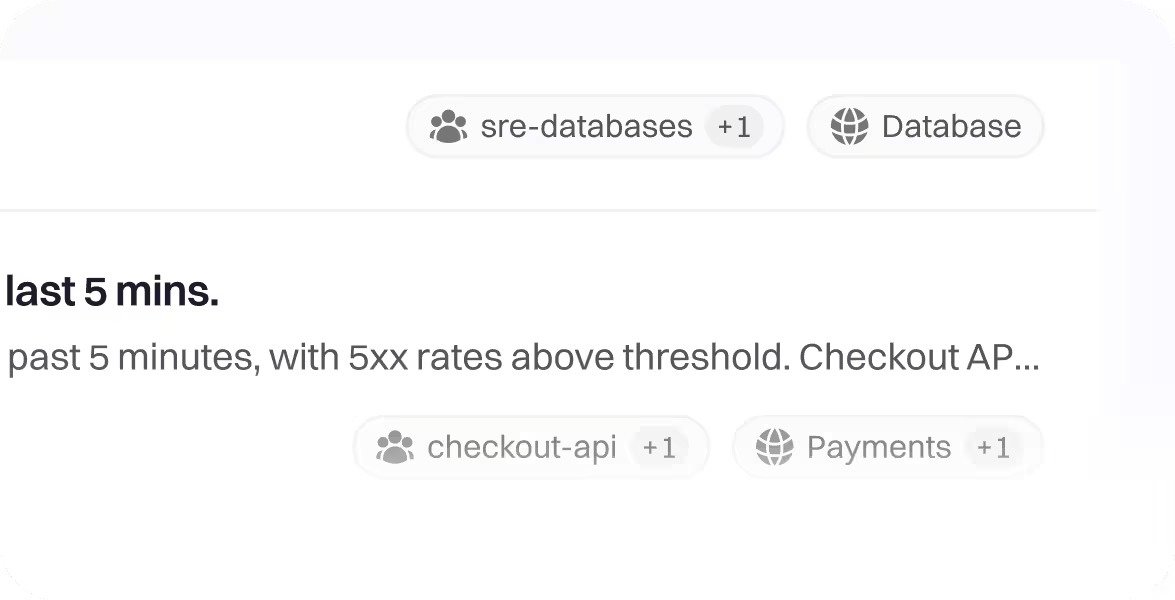
Map alerts to services, services to teams, and more. Rootly pages the right person, based on ownership, every time.

Auto-invite service owners and trigger workflows the moment an incident touches their area.

Notify leadership, bring in customer owners, and alert product teams automatically—based on what's affected and who owns it.

New services added to Catalog automatically update custom fields and ownership across every incident workflow.

See where incidents cluster, which services generate the most alert noise, and which teams carry the heaviest on-call load—filtered by ownership.
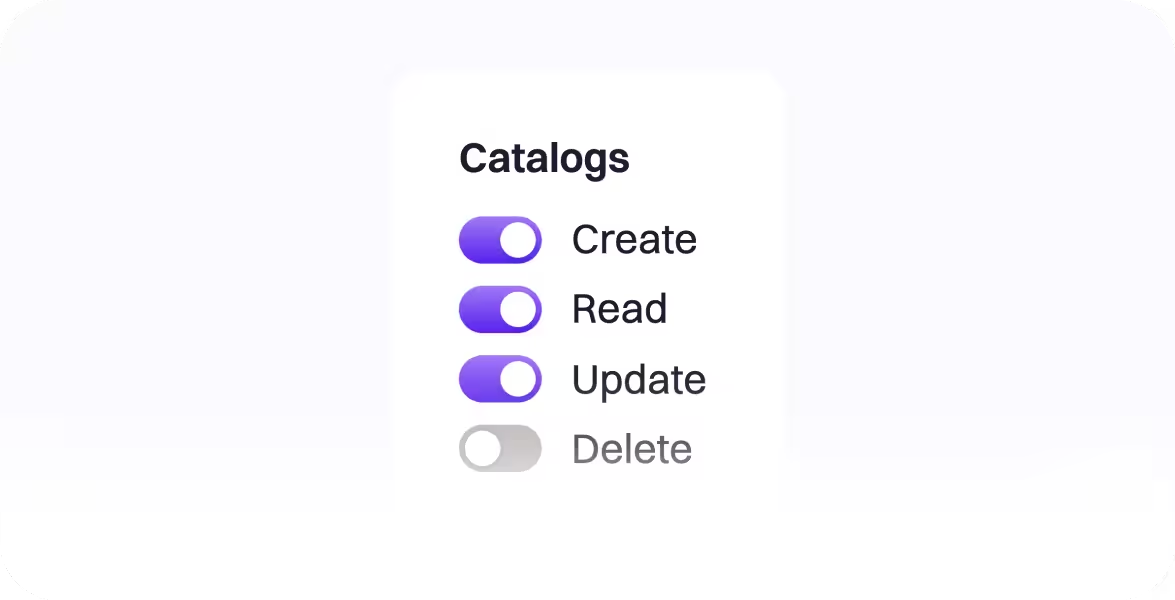
Catalog-aware RBAC, just-in-time access, isolated orgs—so the right people see the right services, and sensitive incidents stay contained by design.
When your platform knows your organization, everything gets faster—routing, investigation, resolution, and learning.

Everything you need to know about Catalogs.
What is Rootly Catalog?
Rootly Catalog is a automated, catalog-driven service directory built directly into Rootly's incident management platform. It stores and organizes your organization's services, teams, components, runbooks, and dependencies—and connects that context to every incident the moment it's declared. When an alert fires, Rootly knows what's affected, who owns it, what runbooks apply, and which teams need to be in the room—without anyone having to look it up.
Learn more: Automated service catalogs for incident management and how Rootly fits a modern incident response stack.
What's the difference between a service catalog and a CMDB?
A CMDB is a configuration database typically managed by IT and updated manually. Rootly Catalog is a living model of your engineering organization—synced continuously from your existing tools, used actively during incidents, and designed for the engineers who respond to them. It's not a record-keeping system. It's the operational context layer that makes every incident smarter.
How does Rootly Catalog connect to incident response?
Every incident declared in Rootly automatically inherits context from the Catalog—affected services, owning teams, related runbooks, upstream and downstream dependencies, and on-call schedules. Responders arrive with context already assembled. Workflows fire based on service ownership. The right people are paged automatically. Catalog is the connective tissue between your org structure and your incident response—not a standalone tool you have to remember to check.
How does Rootly Catalog compare to incident.io's Catalog?
Both products connect organizational context to incidents. The difference is flexibility and integration depth. incident.io describes their Catalog as a "rules engine that understands your organization"—it's a powerful concept, but one that requires you to build and maintain your org model inside their platform on their terms. Rootly Catalog is designed to reflect how your organization already works, syncing from your existing tools, supporting custom types and custom terminology, and integrating with Rootly's full platform including On-Call, AI SRE, and workflow automation, without locking you into a rigid data model you can't adjust as your org evolves.
Can Rootly Catalog sync with my existing service catalog?
Yes. Rootly Catalog integrates with tools like Cortex, Backstage, and other service catalog providers, so if you already have a source of truth, Rootly pulls from it rather than asking you to rebuild. New services added to your catalog are automatically reflected in Rootly, keeping ownership, metadata, and routing rules current without manual maintenance.
How does Catalog affect alert routing and on-call?
Rootly uses, but does not depend on, Catalog data to route alerts to the right team automatically—mapping alerts to services, services to owners, and owners to on-call schedules. When an alert fires, Rootly knows which service is affected, who owns it, and who's on-call for it. No manual triage. No paging the wrong team. No relying on institutional knowledge to figure out who owns what at 3am.
Does Rootly Catalog work for large, complex organizations?
Yes. Rootly Catalog is built for the org’s getting started and the org’s that come with enterprise engineering needs—multiple business units, deeply nested service hierarchies, cross-functional ownership, and teams that change frequently. Custom catalog types let you model your org in your own terminology—teams, squads, domains —without being forced into a structure that doesn't fit. Deep RBAC controls ensure the right people see the right catalog entries, and changes propagate automatically across workflows, routing rules, and incident metadata.
What happens to Catalog data during an incident?
The moment an incident is declared in Rootly, the Catalog populates the incident record with relevant context—affected services, owning teams, dependencies, runbooks, and customer impact. This context is visible to all responders in Slack without leaving the incident channel, auto-populates custom fields, drives workflow automation, and feeds into the retrospective and post-incident reporting. Catalog data doesn't just inform the incident—it helps power the entire response motion from declaration to close.
Why should I choose Rootly over incident.io for Catalog?
Three reasons. First, flexibility and ease of use—Rootly Catalog adapts to your org structure and terminology rather than requiring you to adopt incident.io’s rigid structure. Second, integration with the full incident lifecycle—Catalog context flows directly into On-Call routing, AI SRE investigation, workflow automation, and retrospective generation in a single platform. Third, enterprise depth—RBAC, just-in-time access controls, and isolated tenant support mean Catalog works for security-sensitive and compliance-heavy organizations that need more than a shared service model.












.svg)